
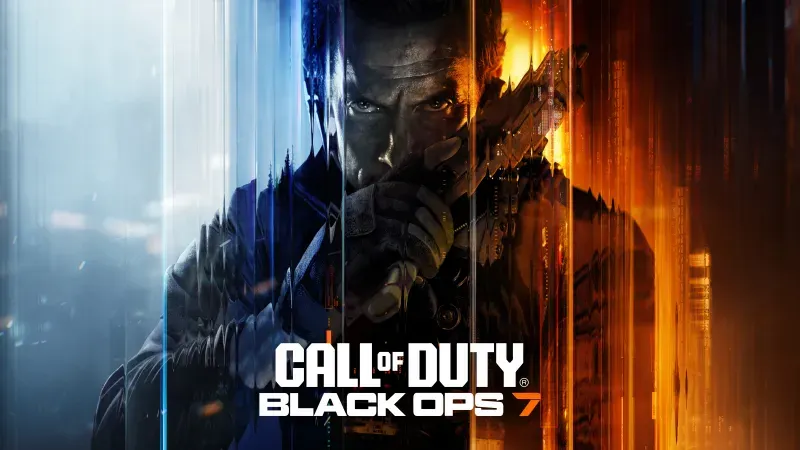
There was a moment roughly six hours into Call of Duty: Black Ops 7 where I genuinely couldn’t believe what I was seeing. Not because of the explosions, the near-photorealistic firefights, or the usual blockbuster spectacle that the series has built its reputation on over the last two decades — but because Treyarch somehow managed to turn a psychedelic DMT-fueled nightmare sequence into one of the most memorable campaign missions Call of Duty has ever produced.
And somehow, that’s not even the craziest part.
Black Ops 7 is the rare sequel that understands exactly what made the subseries iconic while still pushing it into gloriously absurd new territory. Bigger, stranger, and more confident than anything the franchise has attempted in years, this is a triumphant return for Black Ops — and yes, it’s even better than Call of Duty: Black Ops II.
That’s a statement longtime fans might instinctively recoil at. Black Ops 2 has spent over a decade perched comfortably atop the Call of Duty throne thanks to its futuristic setting, branching narrative, and endlessly replayable multiplayer. But Black Ops 7 surpasses it by refining nearly every pillar of the formula. The campaign is sharper and more emotionally grounded, the multiplayer is faster without becoming chaotic, and Zombies mode reaches a level of creativity that feels genuinely revitalizing instead of nostalgic.
The campaign, though, is where Black Ops 7 truly earns its place among the greats. Treyarch leans fully into psychological horror and paranoia in ways that make the original Black Ops look restrained by comparison. Hallucinations distort the battlefield, timelines fracture mid-mission, and characters regularly question whether the events unfolding are real or chemically induced.
The standout is unquestionably the infamous DMT trip sequence, a jaw-dropping mission that spirals from tactical stealth operation into a reality-bending fever dream. Enemies melt into geometric shadows, corridors loop endlessly in impossible architecture, and radio chatter transforms into distorted whispers that feel ripped straight from a panic attack. It’s visually stunning, mechanically inventive, and unlike anything Call of Duty has attempted before. More importantly, it works. Instead of feeling like a gimmick, the sequence becomes the emotional and thematic centerpiece of the entire narrative.
And then there’s the Skibiddy Toilet boss fight.
On paper, it sounds like the kind of meme-chasing disaster that should sink the entire game. In execution, it’s somehow world class.
The towering porcelain monstrosity crashes through a ruined shopping district while blasting corrupted dubstep through broken loudspeakers, forcing players into a multi-phase encounter that constantly evolves in scale and mechanics. One moment you’re ziplining between collapsing rooftops to avoid shockwave attacks; the next you’re piloting a weaponized drone through flooded sewer tunnels while your squad screams increasingly unhinged callouts over comms. It’s absurd, self-aware, and spectacularly designed.
What makes the fight land is Treyarch’s total commitment to the bit. The studio understands that Black Ops has always thrived when it embraces chaos rather than resisting it. The Skibiddy Toilet encounter feels less like a cheap internet reference and more like the logical endpoint of a franchise that once made players interrogate JFK conspiracies and fight zombies alongside historical figures.
Multiplayer is equally impressive. Movement strikes an ideal balance between the grounded weight of recent Modern Warfare entries and the fluid aggression of older Black Ops games. Maps are compact without feeling cramped, gunplay remains wonderfully punchy, and progression systems avoid drowning players in unnecessary clutter. The new “Neural Sync” mechanic, which allows temporary squad-wide tactical buffs during objective play, adds meaningful strategy without overwhelming the traditional formula.
Meanwhile, Zombies mode may quietly be the best the series has ever offered. The launch maps are massive, secrets are genuinely difficult to uncover, and the mode’s narrative finally feels cohesive rather than cryptic for the sake of being cryptic. It’s the first time in years that Zombies feels essential instead of merely nostalgic.
Black Ops 7 isn’t subtle, restrained, or remotely realistic. It’s loud, bizarre, and occasionally completely unhinged. But that’s exactly why it succeeds. Treyarch has delivered a shooter that feels liberated from the franchise’s recent obsession with self-serious military realism, embracing creativity and spectacle at every opportunity.
For a series that has spent years trying to rediscover its identity, Black Ops 7 finally feels fearless again.
Score: 9/10 — Amazing

Leave a Reply